
Lightning rod installation is the heart of what we do, and the only trade our family has practiced since 1964. When a strike hits an unprotected home, millions of volts look for a path to ground through whatever they can find: wiring, plumbing, framing. A properly installed lightning rod system gives that energy a better path, one we build on purpose.
What a complete installation includes
- Air terminals (the rods). Placed about every 20 feet along the ridge cap and on every high point: chimneys, dormers, cupolas, and peaks.
- Conductor cable. Heavy braided cable connecting every terminal, routed along the back side of the roof and down along downspouts so it stays out of sight.
- Bonding. Metal parts of the home, like gutters and vents, are tied into the system so a strike cannot jump between them.
- Ground rods. Driven deep at the base of the home, these carry the strike's energy into the earth and away from everything you care about.
Designed before we ever drive out
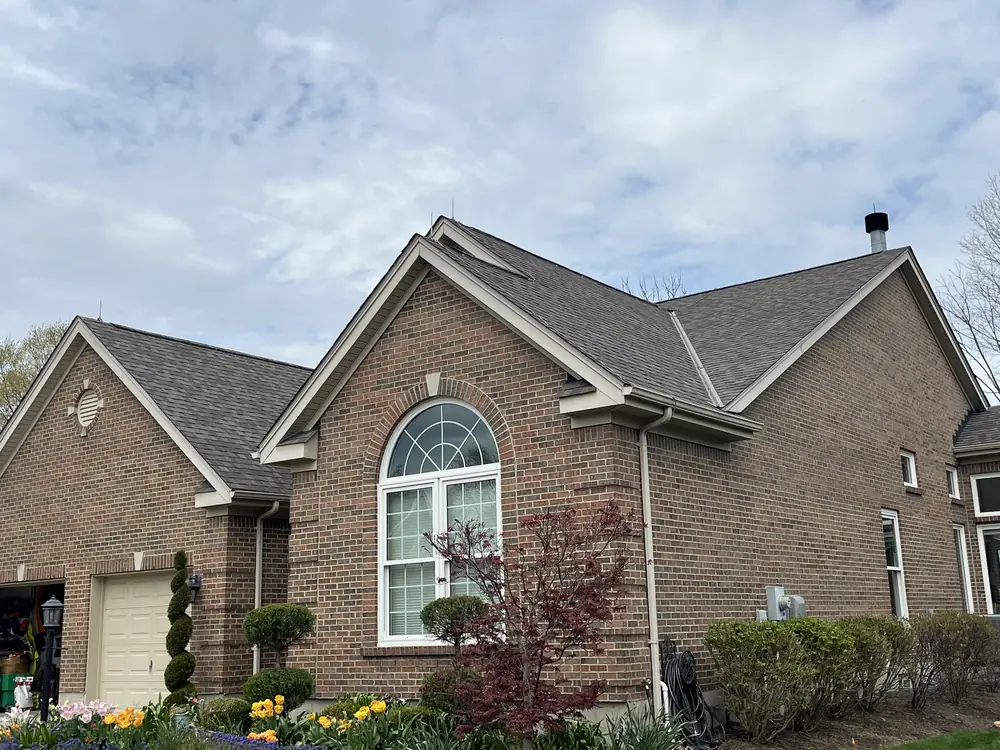
Every installation starts with a real system design, not a ballpark. You send photos of the house and a few simple measurements. We pull satellite imagery of your roof and lay out the full system: how many rods, how much cable, where each ground goes. Then you get one firm number.
Because the design work happens remotely, your address does not change your price. We install across 26 states east of the Mississippi River, and the homeowner in Georgia gets the same design care as the one two roads over from us in Noblesville, Indiana.
Installed clean, in about a day
Most single-family homes are done in a single visit. We show up on time, keep the site tidy, and walk you around the finished system before we leave. Your materials and our craftsmanship are covered for as long as you own the home and the system stays unaltered.
Installation questions
Most homes are finished in one day. Larger homes, guest houses, and outbuildings can add a second day. Your quote includes the schedule, so you know before we start.
Terminals and cable are mounted with fasteners and methods matched to your roof type, and every penetration is sealed. Protecting the home includes protecting the roof itself.
If you are reroofing, the existing system has to come off and go back on correctly. We handle removal and reinstallation so the protection, and your warranty, stay intact.